
As retailers prepare for peak season and review progress against sustainability commitments, packaging is becoming an increasingly important area of focus.
Packaging legislation is not new. However, the pace of change across both the UK and Europe means that packaging is becoming a strategic consideration rather than simply an operational necessity. With packaging reforms continuing to evolve, decisions made today could influence future compliance requirements, costs and operational efficiency.
For retailers outsourcing warehousing, fulfilment and distribution, this extends beyond the packaging customers see. Transport packaging, protective packaging and packaging data are all becoming increasingly important considerations.
The UK Landscape
In the UK, retailers are already navigating a number of packaging reforms, including Packaging Extended Producer Responsibility (pEPR), Packaging Recovery Notes (PRNs) and Recyclability Assessment Methodology (RAM) requirements. These changes are designed to place greater responsibility on organisations that place packaging on the market while encouraging more recyclable and efficient packaging design.
As fee structures continue to evolve, packaging choices may increasingly influence future compliance costs. Understanding packaging materials, recyclability and usage patterns is therefore becoming more important.
The EU Landscape
Across Europe, the Packaging and Packaging Waste Regulation (PPWR) introduces a broader set of packaging requirements designed to reduce waste and improve resource efficiency.
While many organisations are currently focused on reporting and compliance obligations, PPWR also introduces longer-term expectations around packaging design, recyclability, recycled content and reuse.
Different Legislation, Shared Priorities
Although pEPR and PPWR are separate legislative frameworks operating in different jurisdictions, they share a common objective: reducing packaging waste and improving resource efficiency.
The graphic below highlights some of the key areas where the two frameworks overlap:
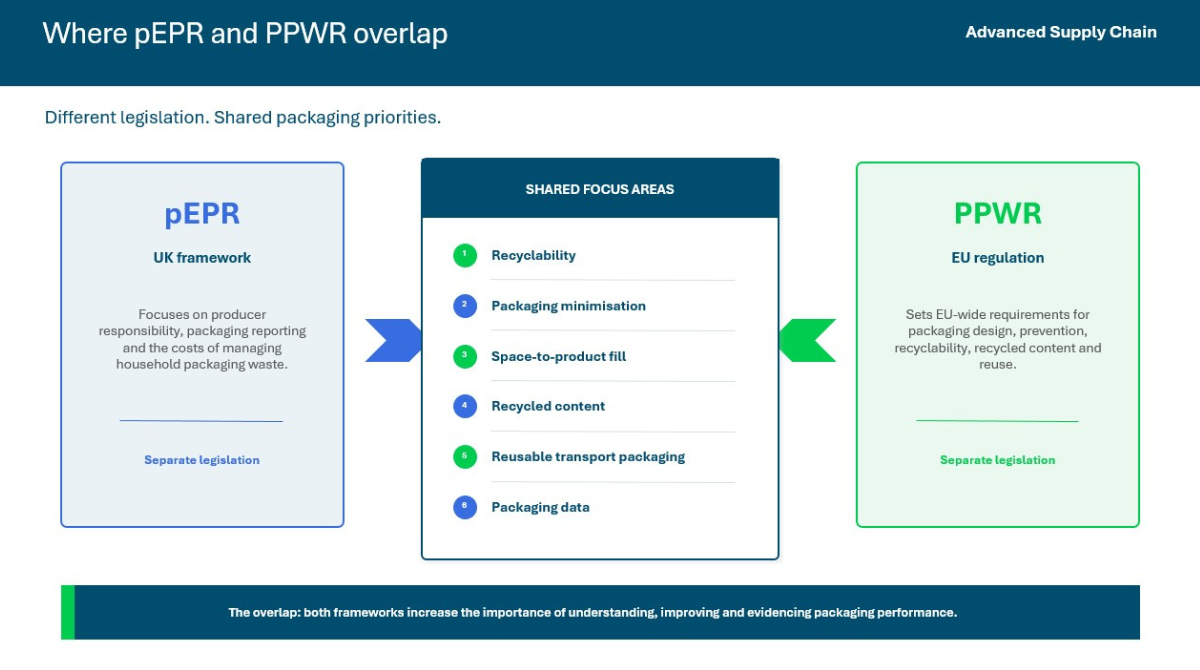
These are all areas that retailers may wish to begin reviewing as packaging requirements continue to evolve.
What Should Retailers Be Thinking About Now?
Rather than viewing pEPR and PPWR as separate compliance exercises, retailers may benefit from focusing on the packaging fundamentals that support both frameworks.
Questions worth considering include:
- Do you have visibility of the packaging materials and volumes used across your operations?
- Is there opportunities to reduce unnecessary packaging?
- How recyclable are your current packaging formats?
- Could reusable transport packaging play a greater role within your supply chain?
- Are packaging suppliers prepared for evolving requirements?
For many retailers, understanding existing packaging usage is likely to be the most valuable place to start. Better visibility can help identify opportunities to improve efficiency, reduce waste and support future compliance planning.
Insights from H1 2026
During the first half of 2026, ASC supported customers with warehousing, fulfilment and distribution activities that relied on a wide range of packaging materials and formats. These operational packaging flows provide valuable insight into the types of packaging currently moving through retail supply chains and the opportunities that may exist to improve efficiency and reduce waste.
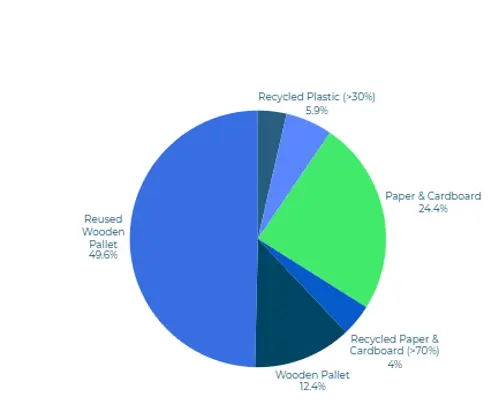
As legislation continues to evolve, retailers may wish to consider whether current packaging specifications are aligned not only with today’s operational requirements, but also with future sustainability and compliance expectations.
How ASC Can Support
While responsibility for packaging compliance sits with retailers, logistics providers can play an important supporting role.
By understanding packaging volumes, material usage and operational packaging flows, retailers can make more informed decisions about packaging efficiency and future packaging strategies.
ASC can support customers by providing visibility of:
- Packaging materials used across logistics operations
- Packaging volumes and consumption trends
- Opportunities to reduce packaging waste
- Reusable transport packaging opportunities
- Packaging data that may support future decision-making
Looking Ahead
The transition towards more sustainable packaging is already underway.
While pEPR and PPWR are distinct frameworks, both encourage retailers to place greater emphasis on packaging efficiency, resource use and data visibility. Retailers that begin reviewing these areas now will be better positioned to adapt to evolving requirements in the years ahead.
If you would like to understand more about how pEPR or PPWR may impact your organisation, please reach out to us today.